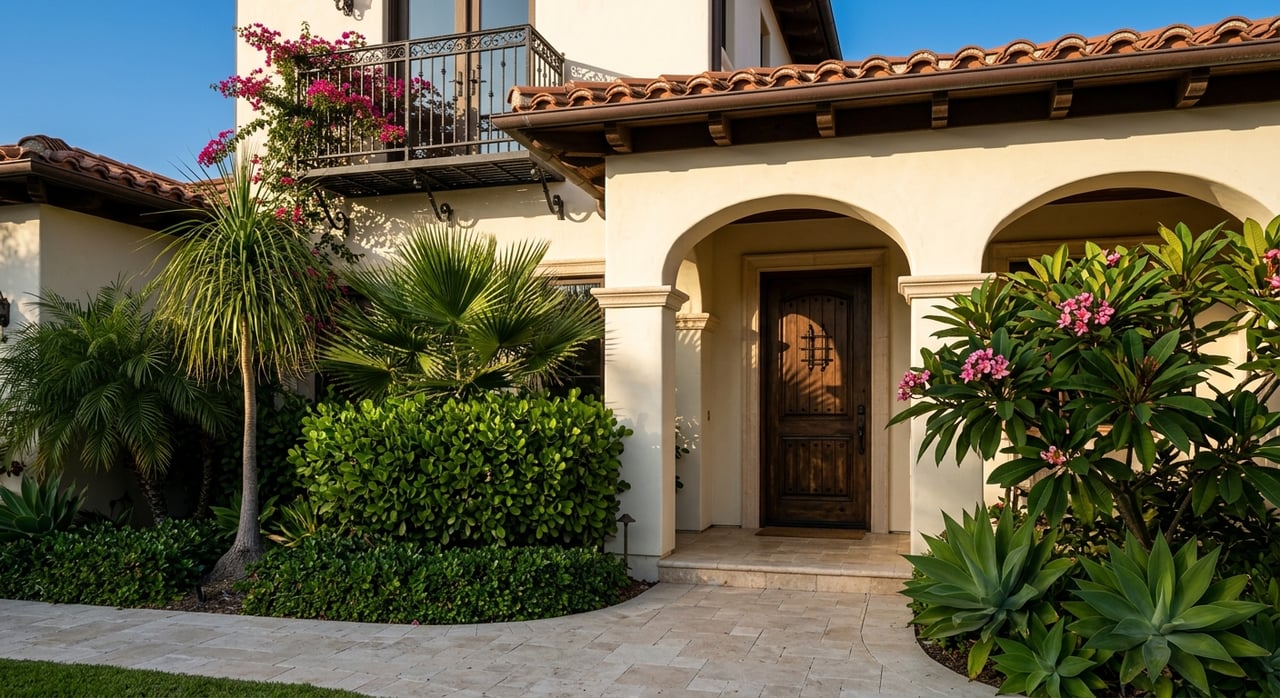
If you are drawn to neighborhoods with real architectural character, El Cid stands out quickly. Just south of downtown West Palm Beach, this historic district pairs waterfront access, mature streetscapes, and a layered collection of early 20th-century homes that still feel relevant today. If you want to understand what makes the area so appealing, this guide will walk you through El Cid’s architecture, daily lifestyle, and the practical ownership considerations that matter before you buy or sell. Let’s dive in.
El Cid at a glance
El Cid is a compact historic district about one mile south of downtown West Palm Beach. Its eastern edge runs along South Flagler Drive on the west shore of Lake Worth, part of the Intracoastal Waterway. According to the National Register nomination, most of the district was built between 1921 and 1930.
That early development pattern still shapes the neighborhood today. The district includes 377 structures, with 281 identified as contributing, and many homes sit on large double-lot parcels. The result is a neighborhood that feels established, scaled, and visually consistent without feeling uniform.
El Cid architecture defines the experience
Architecture is not just a backdrop in El Cid. It is one of the main reasons people are drawn to the area in the first place. For buyers who care about design, proportion, and neighborhood character, El Cid offers a built environment that feels intentional.
Mediterranean Revival leads the district
Mediterranean Revival is the dominant architectural style in El Cid. The National Register nomination says 113 of the district’s 281 contributing structures, or about 40 percent, are Mediterranean Revival residences.
You will often see the hallmarks of that style throughout the neighborhood, including stucco walls, clay barrel tile roofs, arched openings, patios, balconies, wrought iron, and ceramic tile ornament. These details give the area a warm, coastal, and distinctly South Florida identity that reads as both historic and livable.
El Cid is more layered than many expect
While Mediterranean Revival sets the tone, El Cid is not limited to a single architectural language. The district also includes Mission, Monterey, Colonial Revival, Art Moderne, and Modern examples, along with several modernist buildings documented in the nomination.
That variety matters. It gives the neighborhood visual depth and helps El Cid feel like an architectural archive of the 1920s through the 1940s rather than a one-note collection of homes. For design-aware buyers, that mix can make a home search here especially interesting.
Original planning still shapes the streetscape
Part of El Cid’s appeal comes from more than the houses themselves. The original streetscape design played a major role in how the neighborhood feels today.
The National Register nomination notes that many existing lemon, orange, and mango trees were preserved, coconut palms were planted along the streets in 1928, and concrete curbs, sidewalks, a seawall, and a private pier were added along the Lake Worth edge. That history helps explain why the district still feels lush, framed, and cohesive.
Lifestyle in El Cid feels connected
El Cid offers a lifestyle that blends historic residential calm with easy access to the city and waterfront. The neighborhood association describes it as a historic area of single-family homes along the Intracoastal Waterway with tree-lined streets and walking and biking access to shops, restaurants, schools, and downtown West Palm.
For many residents, that means daily life can stay local. You are close enough to the waterfront and downtown core for short trips, but still in a neighborhood defined by residential scale and established streets.
Waterfront access shapes everyday routines
The eastern edge of El Cid along South Flagler Drive brings the Intracoastal into daily view. That waterfront setting supports a routine centered on outdoor movement and quick access to open air, whether that means a walk, a bike ride, or simply time by the water.
Downtown West Palm Beach adds to that rhythm. Waterfront Commons at 100 N Clematis Street includes paved walking trails, shade, restrooms, and public space, and the city says the downtown waterfront provides access to the Intracoastal Waterway with free non-commercial dock use from 5 a.m. to midnight.
Downtown stays within reach
One of El Cid’s strongest advantages is how close it is to downtown West Palm Beach. The city highlights the downtown and City Center area as home to places such as the Great Lawn, Clematis Street events, and CityPlace within the urban core.
That proximity gives El Cid a useful balance. You can enjoy the texture and identity of a historic district while staying close to business, cultural, and waterfront activity.
Nearby parks add to the setting
The areas just south of El Cid help reinforce the neighborhood’s outdoor lifestyle. In the adjacent Prospect and Southland Parks area, the neighborhood association notes about 400 homes, five parks, and regular gatherings such as block parties and park meetups.
George Petty Park offers Intracoastal views, small beach access, picnic areas, and street parking. Greenwood Greenway Park adds trails, seating, and waterfront views. Even if your focus is El Cid itself, these nearby public spaces contribute to the broader feel of the south end of West Palm Beach.
El Cid compared with nearby areas
For buyers exploring this part of West Palm Beach, it helps to understand how El Cid differs from adjacent neighborhoods. El Cid has a more platted street network, while the nearby Prospect Park and Southland Park area is noted for a more curvilinear street pattern.
That may sound subtle, but it affects the feel of each area. Prospect Park and Southland Park can read as softer and more winding, while El Cid often feels more structured and classically framed. Both have architectural interest, but the experience of moving through them is not exactly the same.
Historic ownership comes with practical rules
Buying in a historic district is as much about stewardship as style. In El Cid, the city’s preservation framework is an important part of ownership.
West Palm Beach’s historic preservation program requires exterior changes to historic structures to comply with the city’s ordinance and design guidelines. A Certificate of Appropriateness is required for exterior work, and the city says the Historic Preservation Board reviews demolition within historic districts.
Contributing homes need extra care
If a property is considered contributing within the district, changes are subject to greater review. The city’s preservation FAQ says contributing properties are generally not approved for demolition.
For some buyers, that may feel restrictive at first. In practice, it is also part of what protects the district’s long-term identity and helps preserve the architectural quality that makes El Cid valuable in the first place.
There may be a tax benefit for rehabilitation
The city also notes a potential financial incentive for qualifying projects. West Palm Beach offers a ten-year ad valorem tax exemption for eligible historic rehabilitation work if the application is filed before construction begins.
That does not apply to every project, and buyers should confirm details early. Still, for owners planning thoughtful restoration, it is an important point to understand during due diligence.
Why design-conscious buyers notice El Cid
El Cid appeals to people who want more than square footage or a generic address. The neighborhood offers distinctive architecture, a strong preservation structure, and close access to downtown and the waterfront. That combination is difficult to recreate in newer areas.
For buyers with a sharp eye, the value here is often in the intersection of design and location. You are not choosing between character and convenience. In El Cid, you can find both in the same place.
What to evaluate before buying in El Cid
If you are considering a purchase here, it helps to look beyond the obvious curb appeal. A strategic review should include both design and ownership factors.
Consider these points as you evaluate opportunities:
- Whether the home is a contributing structure within the historic district
- What exterior work may require a Certificate of Appropriateness
- How original architectural details have been preserved or altered
- Lot size and how common double-lot parcels may affect use and value
- Proximity to South Flagler Drive, downtown, and nearby waterfront amenities
- Whether a planned rehabilitation project could qualify for the city’s tax exemption program
In a neighborhood like El Cid, the right purchase is often about fit, not just inventory. Architectural quality, preservation status, and location within the district can all shape long-term enjoyment and decision-making.
Why sellers benefit from El Cid’s identity
For sellers, El Cid’s clear identity can be a real advantage. Buyers are often drawn to neighborhoods that offer recognizable architecture, a strong sense of place, and location-driven lifestyle benefits.
That means presentation matters. A well-positioned El Cid property should be framed around its architectural details, historic context, streetscape presence, and access to the waterfront and downtown West Palm Beach. In a design-led neighborhood, thoughtful strategy usually performs better than generic marketing.
If you are considering buying or selling in El Cid, a measured approach matters. The neighborhood rewards attention to architecture, preservation, and positioning, especially when privacy, timing, and quality of execution are important. For a discreet, strategic conversation about opportunities in this part of West Palm Beach, connect with Chris Scott.
FAQs
What architectural style is most common in El Cid, West Palm Beach?
- Mediterranean Revival is the dominant style, representing 113 of the district’s 281 contributing structures, or about 40 percent, according to the National Register nomination.
What makes El Cid different from other West Palm Beach neighborhoods?
- El Cid combines a compact historic district setting, strong Mediterranean Revival influence, mature tree-lined streets, Intracoastal frontage along South Flagler Drive, and close proximity to downtown West Palm Beach.
What is daily life like in El Cid, West Palm Beach?
- The area supports a lifestyle shaped by walking and biking access, nearby waterfront routes, easy trips to downtown, and access to public spaces along the Intracoastal and in nearby parks.
What should buyers know about historic rules in El Cid?
- Exterior changes to historic structures must comply with the city’s preservation rules, and a Certificate of Appropriateness is required for exterior work.
Can you demolish a contributing historic home in El Cid?
- West Palm Beach says contributing properties in historic districts are generally not approved for demolition.
Are there tax incentives for restoring a historic home in El Cid?
- The city offers a ten-year ad valorem tax exemption for qualifying historic rehabilitation work if the application is filed before construction begins.