"I don't think you have the nerve to say no to Stephen Ross."
That line came from a West Palm Beach resident named Alan Levine, addressing the city commission in mid-July as commissioners debated a six-month pause on new development applications along South Flagler Drive. It is a good line, and it captures the mood in the room. It is also not really what happened.
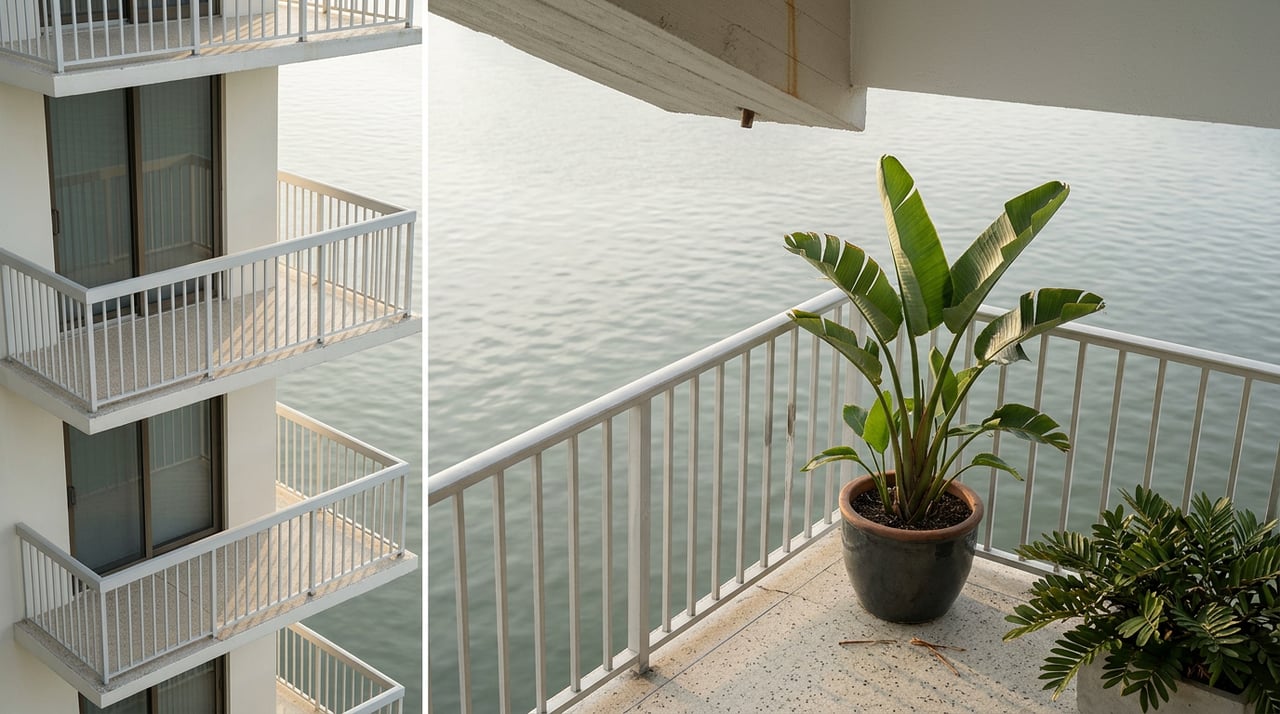
The commission voted unanimously, twice, to freeze new zoning approvals on a six-block stretch of waterfront. Related Ross, the development company controlled by Miami Dolphins owner Stephen Ross, is one of the buyers active on that corridor right now. But the freeze itself was not a referendum on any single developer's influence. It was a response to a legal deadline that had already, months earlier, put four aging condominium buildings on that same stretch into acquisition conversations. The zoning action is downstream of a reserve-funding law. If you are evaluating a waterfront condo purchase anywhere in West Palm Beach right now, that distinction is the thing worth understanding before you look at a single listing.
The Ordinance, Read Plainly
On second reading, adopted July 20, 2026, the West Palm Beach City Commission approved Ordinance No. 5177-26, a city-initiated "zoning in progress" designation covering seven multifamily-zoned properties south of Monroe Drive and north of Southern Boulevard, between Flagler Drive and Washington Road. For six months, no new planned-development applications requiring a zoning change can be filed on those parcels. Anything already in the pipeline is unaffected. The pause is scheduled to expire January 20, 2027, unless the commission extends it.
City staff told commissioners they plan to bring back proposed overlay regulations for the corridor by January 2027, with an outside consultant, Zyscovich, running the technical and economic analysis while staff handles community outreach. This is not a new playbook for the city. It ran the same process last year on the North Flagler corridor before finalizing new zoning rules there.
None of that is dramatic on its own. Cities pause zoning to study corridors all the time. What makes this pause worth a longer look is which seven properties it covers, and why so many of them were already in play before the ordinance existed.
Why Four Buildings on One Corridor Are Suddenly For Sale
Florida's condominium reserve law changed the economics of owning an aging coastal building, and the change landed on a strict calendar. SB 4-D, passed in 2022 after the Surfside collapse, created the Structural Integrity Reserve Study requirement for condo and co-op buildings three stories or taller. SB 154 refined it in 2023. HB 913, effective July 1, 2025, tightened it further, and raised the statutory reserve threshold from $10,000 to $25,000 per structural item, adjusted annually for inflation. For 2026, that adjusted figure is $25,675.
The part that matters most for older buildings: for budgets adopted after December 31, 2024, associations can no longer waive or underfund reserves for the eight components a SIRS covers, including roof, load-bearing structure, waterproofing, and windows and exterior doors. Full funding was required to begin January 1, 2026. A board that spent decades keeping dues low by skipping reserve contributions no longer has that option. The choice narrows to two: pass the funding gap to owners through a special assessment, or sell the building to a buyer willing to absorb that gap in the purchase price.
That is the choice several boards on South Flagler Drive appear to be making right now.
| Building | Age | Reported Activity |
|---|---|---|
| Flagler Yacht Club Condominium (3701 S. Flagler Dr.) | 45 years | Named target, alongside Portofino South, in a combined buyout proposal reported at roughly $430 million in February 2026 |
| Portofino South Condominium (3800 Washington Rd.) | 55 years | Same proposed combined buyout |
| Southbridge Condominium (3915 S. Flagler Dr.) | 45 years | Roughly 71 percent of units purchased by Related Ross for about $38 million at the start of 2026 |
| Harbor Towers & Marina Condominium | Not publicly reported | Named in the ordinance; recorded sales activity on this corridor shows unusually fast turnover, consistent with concentrated buying rather than typical retail resale |
Two of the remaining addresses in the ordinance are held by apartment buildings, one on Flagler Drive and one on Washington Road, neither matched to a building name in reporting so far. What is consistent across the identified buildings is age. Every one of them is old enough to be squarely inside the reserve law's reach, and old enough that the concrete, plumbing, and waterproofing components a SIRS inspects are the components most likely to need real money.
What a Reserve-Driven Assessment Actually Costs
To understand why an owner in a 45-year-old building might prefer a buyout offer to a board meeting, it helps to look at what SIRS-driven assessments have looked like elsewhere in South Florida under this same law. At Palm Bay Yacht Club in Miami, a 235-unit, 27-story building, the total assessment reached $46 million, or as much as $175,000 per unit. At Cricket Club in North Miami, a bay-front building constructed in 1975, the assessment came to roughly $30 million, about $134,000 per unit. These are not South Flagler Drive numbers, and no assessment of that size has been reported at Flagler Yacht Club, Portofino South, or Southbridge specifically. But they describe the exact profile of building the reserve law was written for: coastal, multi-decade-old, previously under-reserved. That is also a precise description of every named property in Ordinance 5177-26.
Given that math, a developer offer that clears the reserve problem in one transaction starts to look less like an aggressive buyout and more like a rational exit for an owner facing a funding requirement the law no longer lets the board defer.
The Buyout Math Behind the Freeze
The proposed Beko Equities acquisition of Flagler Yacht Club and Portofino South, a joint venture between Miami-based Immocorp Capital and Hong Kong-based O.D. Kobo, was reported at approximately $430 million in February 2026, with no replacement plans made public yet. Related Ross's purchase of roughly 71 percent of Southbridge's units for about $38 million closed at the start of the year. Two buyers, working two separate deals, converged on the same six-block stretch within months of each other. That convergence, not any single developer's ambitions, is what prompted the city to pause new applications while it works out what should replace these buildings if and when they come down.
For a buyer looking at this corridor today, the practical read is this: a unit in one of these four buildings is not a normal resale. It is either priced with the reserve problem already reflected, or it is priced as though nothing has changed, in which case the gap between list price and reality is the negotiation.
What This Changes If You're Looking at a Resale Unit Here
Before writing an offer on any waterfront condo three stories or taller in West Palm Beach, not just on this corridor, ask for:
- The most recent Structural Integrity Reserve Study and milestone inspection report, and whether either flagged deferred work on the eight mandated structural components
- The current reserve schedule, and whether the association's budget was adopted before or after December 31, 2024, since that date determines whether reserve waivers were still legally possible
- Board minutes from the past 12 to 24 months, specifically any discussion of acquisition offers, special assessments, or engineering scopes tied to a milestone finding
- Whether the building appears on any list of properties with pending or proposed sales to a developer, and if so, what stage those talks are at
None of this makes an older building a bad purchase. A building that already completed its SIRS, funded its reserves, and cleared its milestone inspection has effectively de-risked the exact problem driving activity elsewhere on the corridor, and that clean paperwork is worth paying for. The risk sits with buildings where none of that has happened yet and the board has not said why.
The Number Underneath the Median
West Palm Beach's citywide condo list price median actually fell to roughly $212,500 in August 2026, down from about $235,000 a year earlier. On its own, that reads like a softening market. But market observers following the corridor report mid-tier waterfront units along Flagler Drive still trading in the $1.5 million to $4 million range, with new construction and penthouse product pushing past $5 million. Those two facts are not in conflict once you account for what is dragging the citywide median down: an aging stock of smaller, older buildings, some of them carrying exactly the reserve exposure described above, sitting on the market longer while buyers wait to see how the SIRS requirements shake out. The premium waterfront tier is not participating in that softening because reserve strength, not square footage, is increasingly what separates the two segments.
A Few Questions Worth Asking Directly
Does the freeze stop a condo that's already listed from selling? No. It only blocks new applications that require a rezoning. A private resale closing on any of the seven properties, or anywhere else in the city, proceeds normally.
Could the pause extend past January 20, 2027? The ordinance allows the commission to extend it, and the city took a similar approach on North Flagler last year before finalizing new rules there, so a longer runway on South Flagler would follow a pattern the city has already used once.
Does the freeze change a building's SIRS or milestone inspection deadlines? No. Those deadlines come from state law, not city zoning, so every building inside the paused corridor is still on the same reserve-funding clock as buildings anywhere else in Florida.
Buying waterfront in West Palm Beach right now means underwriting two things at once: the unit, and the building's relationship to a state law that is actively reshaping which older properties survive as condominiums and which become assembly sites. That second part rarely shows up in a listing description. If you want a second set of eyes on a specific building's reserve position before you write an offer, reach out to Chris Scott to request an introduction.